Overview
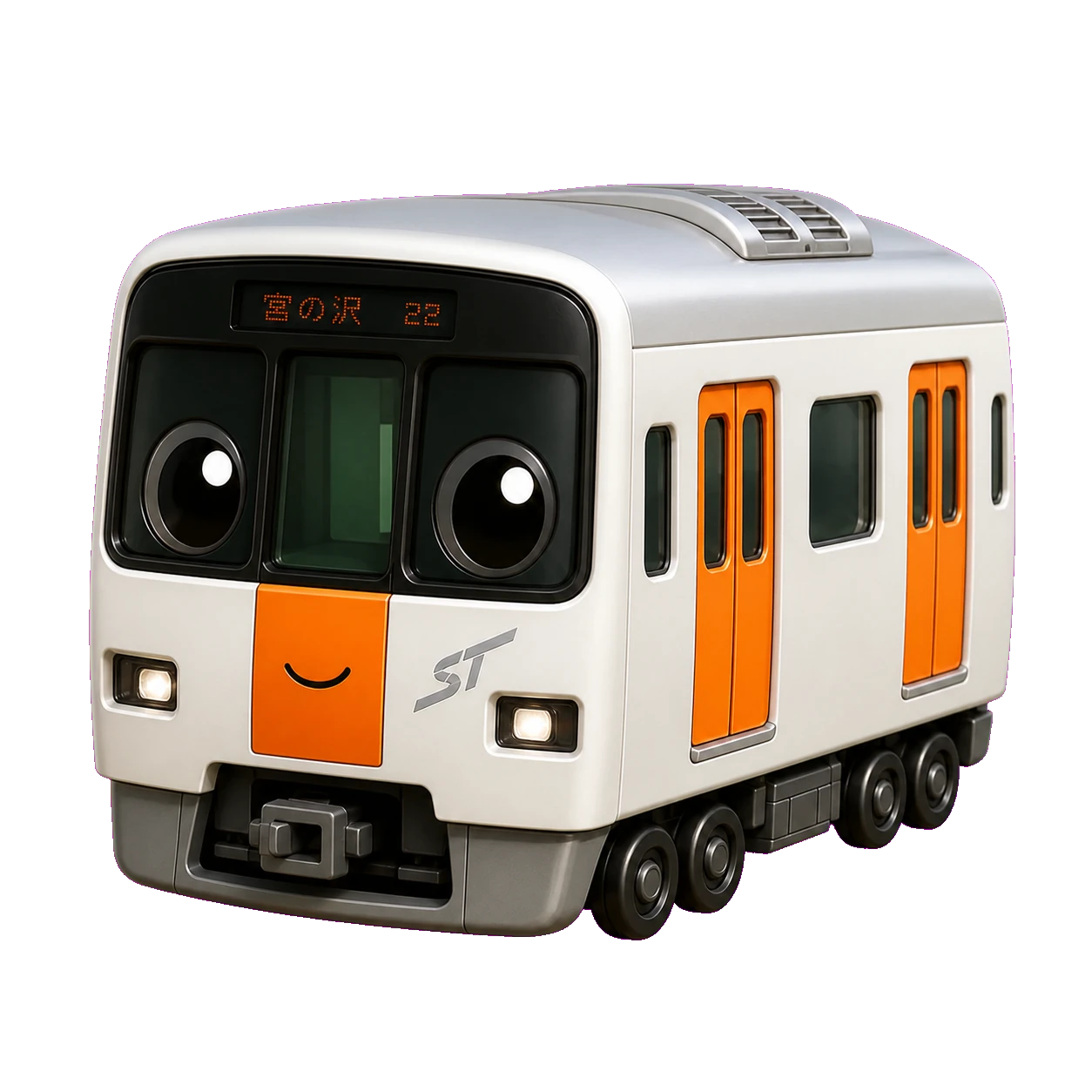
The Tozai Line (T) is Sapporo's east-west axis and the biggest line on the network by every measure: 19 stations, 20.1 km, the largest fleet, 35 minutes end to end. It opened in 1976 between Kotoni and Shiroishi, ran east to Shin Sapporo in 1982, and finally reached Miyanosawa in 1999. Unlike the Namboku Line it stays underground the entire way — and so does its depot, buried between Nijuyonken and Nishi nijuhatchome with a car park and a housing estate sitting on the roof. The Toho Line, which has no depot at all, stables its trains there too and runs them through Tozai tunnels to get them home.
Along the route
Miyanosawa is the walk-up station for Shiroi Koibito Park; Kotoni is a dense western sub-centre; Maruyama koen serves the park, the Hokkaido Shrine and the zoo, and is where you change for the bus up to the Okurayama ski jump. Nishi juhatchome and Nishi juitchome carry you through the government district into Odori, then Bus Center mae sits at the eastern end of the Aurora Town underground mall. East of Shiroishi the line strings itself out along Nango-dori, a corridor whose land the city had quietly assembled decades earlier for a railway that was never built, and finishes through Oyachi and Hibarigaoka at Shin Sapporo — the easternmost subway station in Japan, and the sub-centre with the aquarium, the science museum and JR's own Shin-Sapporo, which is exactly why the subway writes its version 新さっぽろ in hiragana.
Why play it
The three Nango stops are the trap, and they are consecutive. Nango nana chome, Nango jusan chome and Nango juhatchome are identical at both ends and differ only in the middle, so once the fingers have committed to なんごう they will happily finish the wrong station. Nijuyonken is worth learning early too: 24 here is にじゅうよん, not the よ that the Namboku Line uses for the same number. And Bus Center mae is the only katakana name on the line: ばすせんたーまえ, where the long-vowel bar is typed as a hyphen — the one non-letter key you will press in the whole run.
Line data
Everything below is derived from the station data the game runs on, so it always matches what you actually type on the 東西線 — all 19 stops of it.
- Operator
- Sapporo Municipal Subway
- Line symbol
- T
- Stations
- 19
- Shape
- Terminal to terminal
- Termini
- 宮の沢 — 新さっぽろ
How much typing is this?
Typing every station name on this line takes 238 keystrokes, an average of 12.5 per station. The longest name is 西28丁目 (nishi-nijuhatchome) at 19 keystrokes; the shortest is 琴似 (kotoni) at 6. Those counts come from running each name's kana through the game's own romaji engine, so they are what your fingers actually do — not the length of the printed spelling.
Along the way: 7 names contain a small っ, which doubles the next consonant; 7 contain a small ゃ, ゅ or ょ, where the engine accepts both the Hepburn and Kunrei spellings (sha or sya, shu or syu); and 2 end in ん, whose trailing n folds into whatever comes next rather than standing alone.
Where you can change trains
4 of the 19 stations on this line connect to another line in the game. Follow any symbol to that line's guide.
Every station on the line
All 19 stations in order, with the official station number, the name in kanji, the kana the typing is derived from, and its Hepburn romaji.
| # | No. | Station | Kana | Romaji |
|---|---|---|---|---|
| 1 | T01 | 宮の沢 | みやのさわ | miyanosawa |
| 2 | T02 | 発寒南 | はっさむみなみ | hassamu-minami |
| 3 | T03 | 琴似 | ことに | kotoni |
| 4 | T04 | 二十四軒 | にじゅうよんけん | nijuyonken |
| 5 | T05 | 西28丁目 | にしにじゅうはっちょうめ | nishi-nijuhatchome |
| 6 | T06 | 円山公園 | まるやまこうえん | maruyama-koen |
| 7 | T07 | 西18丁目 | にしじゅうはっちょうめ | nishi-juhatchome |
| 8 | T08 | 西11丁目 | にしじゅういっちょうめ | nishi-juitchome |
| 9 | T09 | 大通 | おおどおり | odori |
| 10 | T10 | バスセンター前 | ばすせんたーまえ | basu-senta-mae |
| 11 | T11 | 菊水 | きくすい | kikusui |
| 12 | T12 | 東札幌 | ひがしさっぽろ | higashi-sapporo |
| 13 | T13 | 白石 | しろいし | shiroishi |
| 14 | T14 | 南郷7丁目 | なんごうななちょうめ | nango-nana-chome |
| 15 | T15 | 南郷13丁目 | なんごうじゅうさんちょうめ | nango-jusan-chome |
| 16 | T16 | 南郷18丁目 | なんごうじゅうはっちょうめ | nango-juhatchome |
| 17 | T17 | 大谷地 | おおやち | oyachi |
| 18 | T18 | ひばりが丘 | ひばりがおか | hibarigaoka |
| 19 | T19 | 新さっぽろ | しんさっぽろ | shin-sapporo |