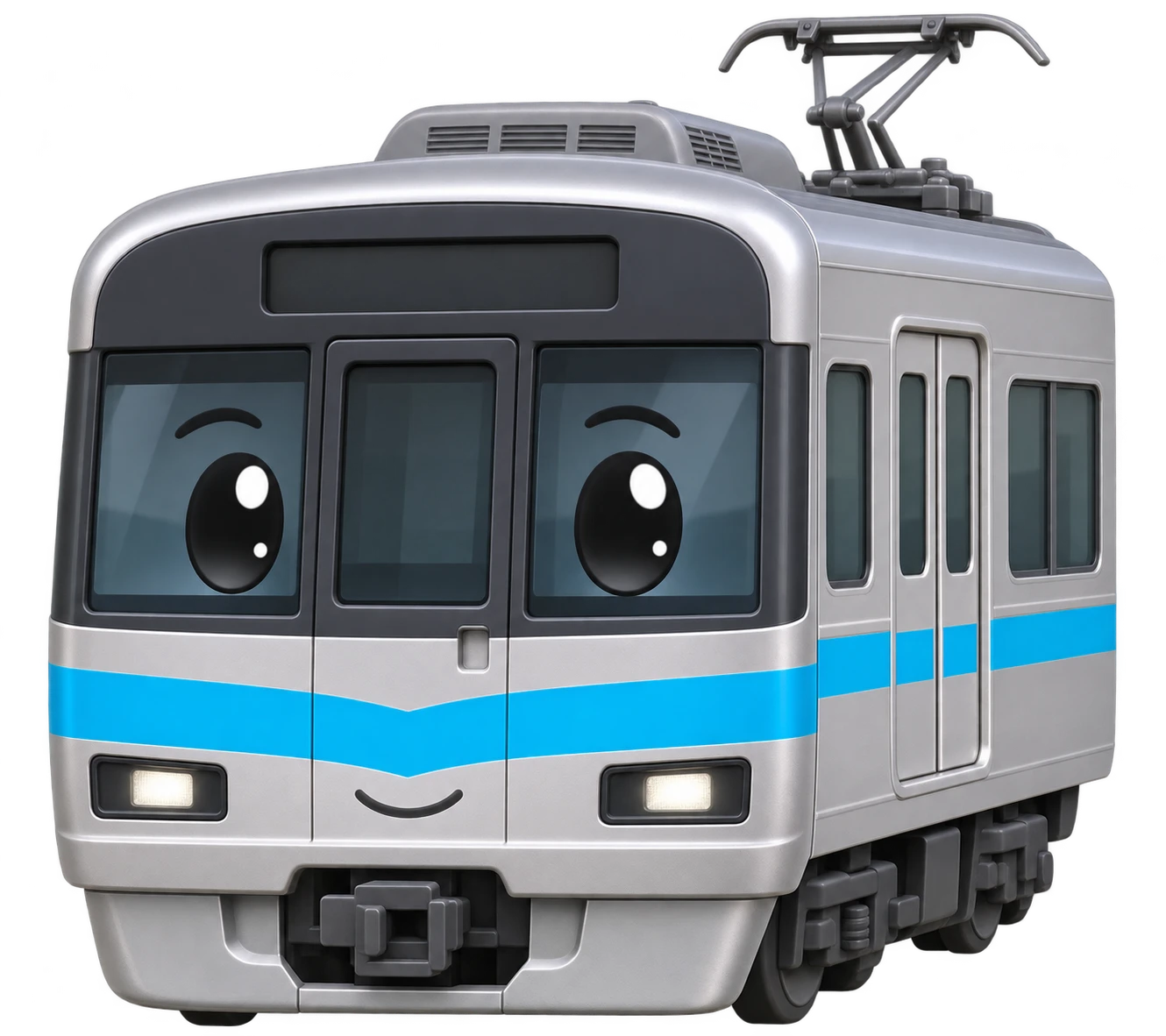
Overview
The Tsurumai Line connects Kamiotai in the northwest with Akaike in the southeast. This course includes all 20 subway stations. Meitetsu trains may continue beyond the subway at either end, but the Inuyama and Toyota lines are separate routes and are not appended to this run.
Connections
Fushimi connects to the Higashiyama Line; Kamimaezu and Yagoto connect to the Meijo loop. At Marunouchi and Gokiso, change to the Sakura-dori Line. The map follows the real diagonal alignment, including the bends through central Nagoya.
Typing tips
上小田井 is かみおたい, with a clear たい ending. 御器所 reads ごきそ, not a reading guessed one kanji at a time. 庄内緑地公園, しょうないりょくちこうえん, is the longest early test: split it into しょうない・りょくち・こうえん. 塩釜口 is しおがまぐち. Practise those names slowly before trying to maintain one steady pace from terminal to terminal.
Line data
Everything below is derived from the station data the game runs on, so it always matches what you actually type on the 鶴舞線 — all 20 stops of it.
- Operator
- Nagoya Municipal Subway
- Line symbol
- T
- Stations
- 20
- Shape
- Terminal to terminal
- Termini
- 上小田井 — 赤池
How much typing is this?
Typing every station name on this line takes 172 keystrokes, an average of 8.6 per station. The longest name is 庄内緑地公園 (shonai-ryokuchi-koen) at 21 keystrokes; the shortest is 植田 (ueda) at 4. Those counts come from running each name's kana through the game's own romaji engine, so they are what your fingers actually do — not the length of the printed spelling.
Along the way: 0 names contain a small っ, which doubles the next consonant; 4 contain a small ゃ, ゅ or ょ, where the engine accepts both the Hepburn and Kunrei spellings (sha or sya, shu or syu); and 3 end in ん, whose trailing n folds into whatever comes next rather than standing alone.
Where you can change trains
7 of the 20 stations on this line connect to another line in the game. Follow any symbol to that line's guide.
Every station on the line
All 20 stations in order, with the official station number, the name in kanji, the kana the typing is derived from, and its Hepburn romaji.
| # | No. | Station | Kana | Romaji |
|---|---|---|---|---|
| 1 | T01 | 上小田井 | かみおたい | kamiotai |
| 2 | T02 | 庄内緑地公園 | しょうないりょくちこうえん | shonai-ryokuchi-koen |
| 3 | T03 | 庄内通 | しょうないどおり | shonai-dori |
| 4 | T04 | 浄心 | じょうしん | joshin |
| 5 | T05 | 浅間町 | せんげんちょう | sengen-cho |
| 6 | T06 | 丸の内 | まるのうち | marunouchi |
| 7 | T07 | 伏見 | ふしみ | fushimi |
| 8 | T08 | 大須観音 | おおすかんのん | osu-kannon |
| 9 | T09 | 上前津 | かみまえづ | kamimaezu |
| 10 | T10 | 鶴舞 | つるまい | tsurumai |
| 11 | T11 | 荒畑 | あらはた | arahata |
| 12 | T12 | 御器所 | ごきそ | gokiso |
| 13 | T13 | 川名 | かわな | kawana |
| 14 | T14 | いりなか | いりなか | irinaka |
| 15 | T15 | 八事 | やごと | yagoto |
| 16 | T16 | 塩釜口 | しおがまぐち | shiogama-guchi |
| 17 | T17 | 植田 | うえだ | ueda |
| 18 | T18 | 原 | はら | hara |
| 19 | T19 | 平針 | ひらばり | hirabari |
| 20 | T20 | 赤池 | あかいけ | akaike |