The Tokyo Metro Ginza Line is the oldest subway in Asia, and it is also one of the most satisfying lines to type in Tokyo Rail Typing. This Ginza Line guide walks through its history, its stations, and why this short, dense line makes such a great practice run.
A subway that opened in 1927
The Ginza Line's first section, Asakusa to Ueno, opened in December 1927 — the earliest underground railway anywhere in Asia. It was extended stop by stop over the following decade until it reached Shibuya, forming the route we ride today. Nearly a century later it still carries huge crowds through the heart of the city, which is exactly why so many people search for an oldest subway in Asia story and land on this line.
The orange line, code G
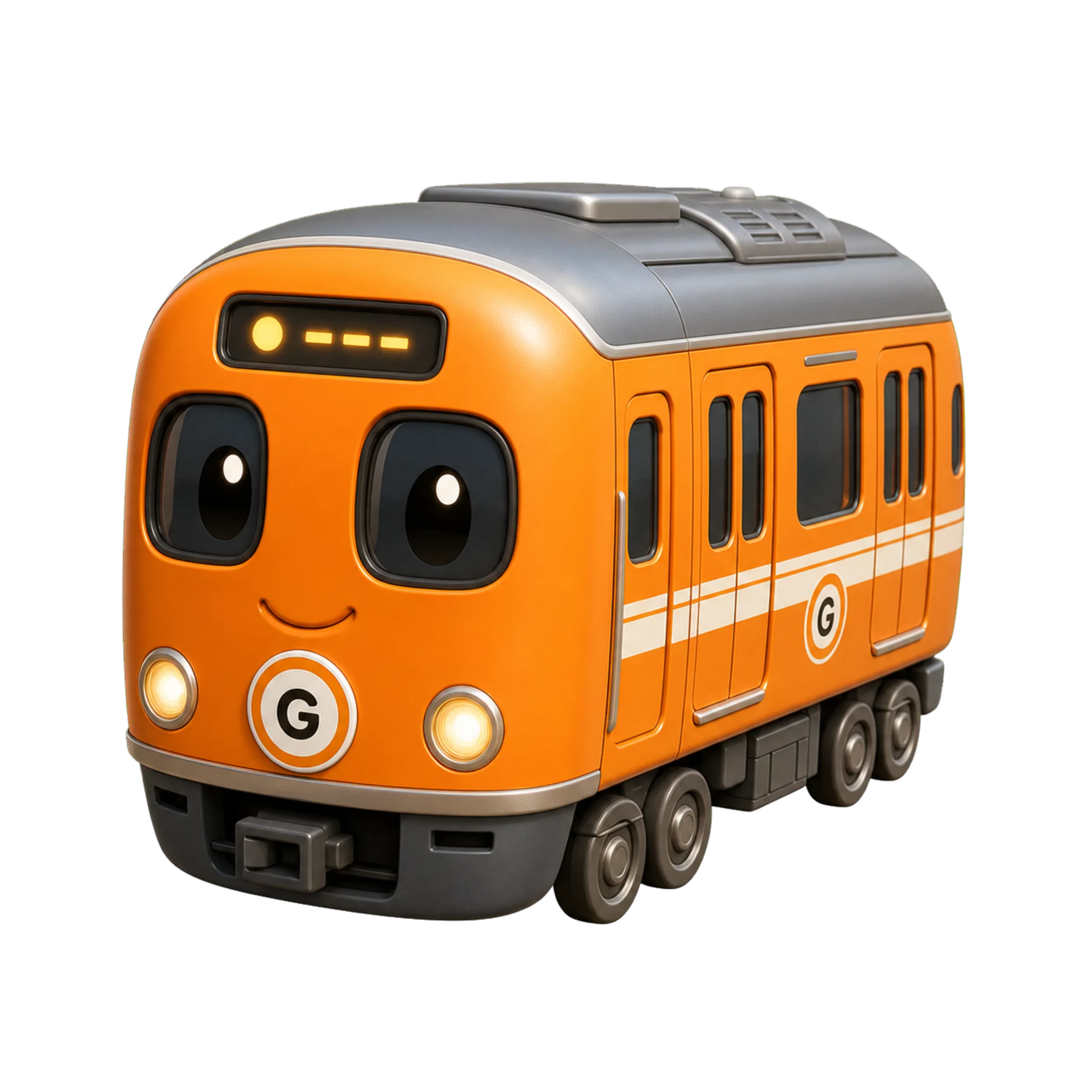
On the map the Ginza Line is impossible to miss: it is drawn in orange and carries the letter code G. Every station has a number too (Asakusa is G-19, Shibuya is G-01), so even first-time visitors can follow it without reading a word of Japanese. When people say Tokyo Metro Ginza, this orange strip is what they mean.
A straight run from Asakusa to Shibuya
Unlike the looping Yamanote, the Ginza Line is linear — it runs terminal to terminal, from Asakusa in the old-town northeast to Shibuya in the fashionable southwest, across 19 stations. That end-to-end shape matters in the game: a run on a linear line is always a full terminal-to-terminal traversal, so every attempt covers the same ground and every result is directly comparable.
Ginza Line stations worth knowing
The line threads together a remarkable run of landmarks. A quick tour of the Ginza Line stations you will type:
- Asakusa — the northern terminal, home to Sensoji temple and old Tokyo atmosphere.
- Ueno — museums, the zoo, and a major transfer hub.
- Nihombashi — historic bridge and the traditional center of the city.
- Ginza — the flagship shopping district that gives the line its name.
- Shimbashi (Shinbashi) — a salaryman classic and gateway to Odaiba.
- Toranomon — offices, embassies, and the modern business core.
- Omotesando — leafy avenues and high-end fashion.
- Shibuya — the southern terminal and one of the busiest crossings on earth.
Why it is a great line to type
The Ginza Line is compact, so it is perfect when you want a full, clean run without committing to a long lap. The station names are a friendly mix — short ones like Ueno and Ginza let you build speed, while Nihombashi and Omotesando test your rhythm. Because runs are always terminal to terminal, chasing a personal best feels focused rather than sprawling.
To play it, just pick the Ginza Line, choose your direction, and type each station to send the train end to end. Your result shows time, CPM, WPM, accuracy, and per-station splits, with personal bests tracked separately for each line and each mode (romaji, kana, or kanji-IME). If you want the line facts first, start at the Ginza Line intro.
Where to go next
- Wondering which operator to explore first? Read Tokyo Metro vs JR.
- Ready for the flagship loop? Try the Yamanote Line guide.
- Or browse every article on the blog.
Asia's oldest subway is also one of its quickest to master on the keyboard. Pick the Ginza Line, and run it from Asakusa to Shibuya.