Riding the Tokyo Metro Ginza Line is one of the easiest ways to see the best of the city on a single orange train. Line symbol G, operated by Tokyo Metro, it runs in a straight shot from Asakusa to Shibuya, links 19 stations, and first opened in 1927 — making it Asia's oldest subway. This is a practical rider's guide: how to ride it, which stops to get off at, and why the G line is such a friendly place to start typing. For the full station-by-station history, see our separate Ginza Line guide.
How to ride the Ginza Line
The Ginza Line is refreshingly simple. It is linear, so there is no loop and no branch to worry about — every train runs terminal to terminal. Look for the orange color and the letter G on any station sign, platform pillar, or Ginza Line map. Each stop also carries a number, from G-19 (Asakusa) in the northeast down to G-01 (Shibuya) in the southwest, so you always know which way you are heading without reading a word of Japanese.
Just check whether your destination has a higher or lower G-number than where you are, board the train pointing that way, and count down (or up) to your stop. Trains come every few minutes, so you rarely wait long.
Ginza Line stations and transfers worth knowing
The line threads a remarkable string of landmarks. These are the Ginza Line stations most riders plan around:
- Asakusa (G-19) — the northern terminal, home to Sensoji temple and old-Tokyo atmosphere. Transfer to the Toei Asakusa Line.
- Ueno (G-16) — museums, the zoo, and a big park; a major transfer hub for JR and the Hibiya Line.
- Ginza (G-09) — the flagship shopping district that gives the line its name, with transfers to the Marunouchi and Hibiya lines.
- Shimbashi (G-08) — a classic salaryman quarter and the gateway to the Yurikamome monorail out to Odaiba.
- Shibuya (G-01) — the southern terminal, the famous scramble crossing, and connections to the JR Yamanote Line and beyond.
Between them you also pass Nihombashi, the traditional center of the city, and Omotesando, Tokyo's leafiest fashion avenue — both worth a stop if you have time.
Why it is great for first-time visitors
If you only learn one subway line on a first trip, make it this one. The Tokyo Metro Ginza Line connects the old town (Asakusa), the culture hub (Ueno), the shopping heart (Ginza), and the youth-culture capital (Shibuya) on a single ride. The color-and-number system means you can navigate confidently from day one, and because the route is short and central, most of what a first-timer wants to see sits within a stop or two of the platform.
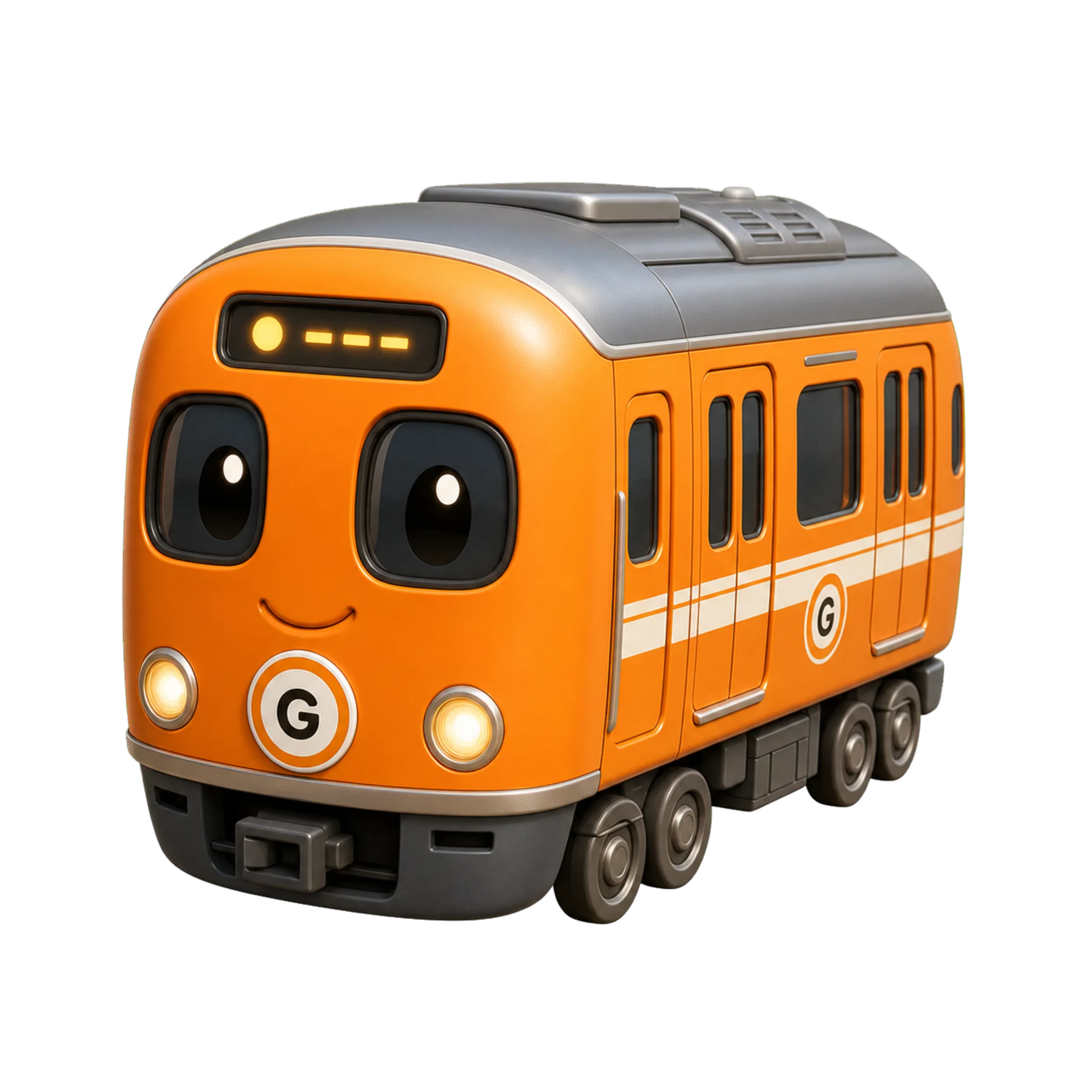
The distinctive orange trains are part of the charm too — retro yellow-and-orange liveries that nod to the line's long history and make it easy to spot the right platform.
Why the Ginza Line is great typing practice
The same qualities that make the Ginza Line easy to ride make it a great line to type. It is compact, so you get a full, clean run without committing to a long lap. And because it is linear, every attempt is a complete terminal-to-terminal traversal — the same 19 stations every time — so your results are directly comparable and chasing a personal best stays focused.
The station names are a friendly mix: short ones like Ueno and Ginza let you build speed, while Nihombashi and Omotesando test your rhythm. It is an ideal warm-up before tackling a bigger route.
To try it, just pick the Ginza Line, choose your direction, and type each station to send the train from Asakusa to Shibuya. Your result shows time, CPM, WPM, accuracy, and per-station splits, with personal bests tracked separately for each line and mode. New to the line facts? Start at the Ginza Line intro, and if you are deciding where to explore first, read Tokyo Metro vs JR.
Asia's oldest subway is also one of its quickest to master on the keyboard. Ride it, then type the Ginza Line from Asakusa to Shibuya.