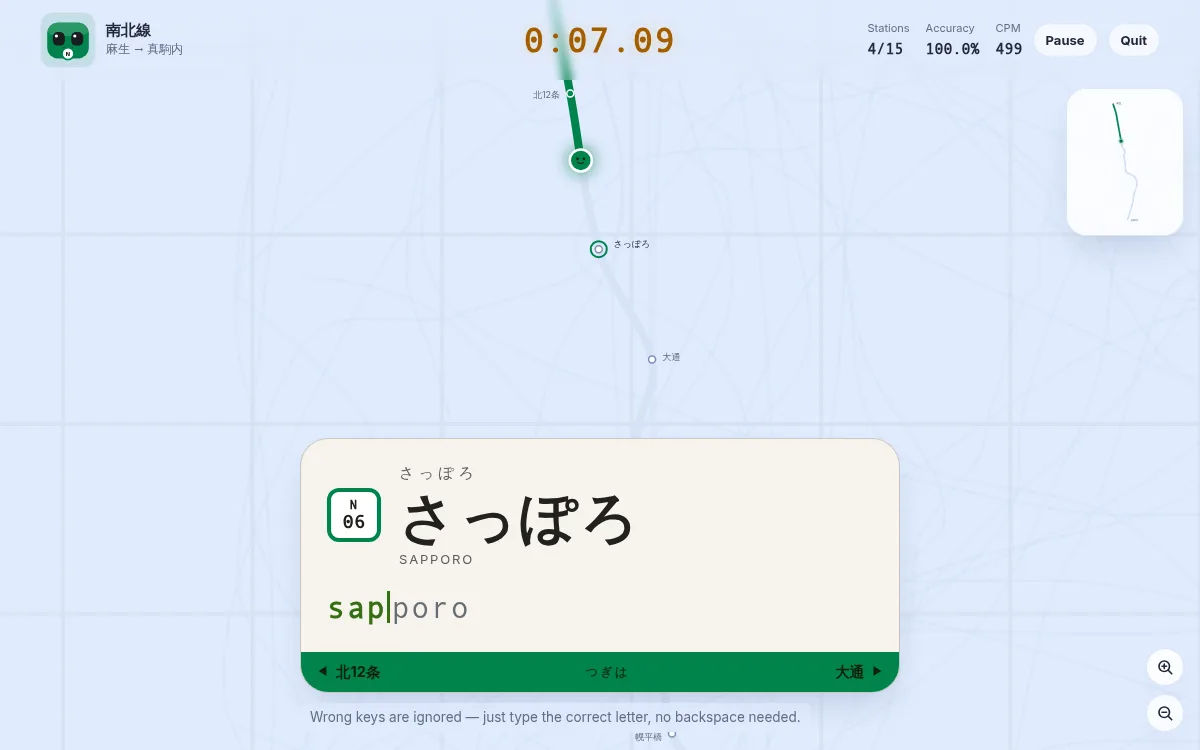
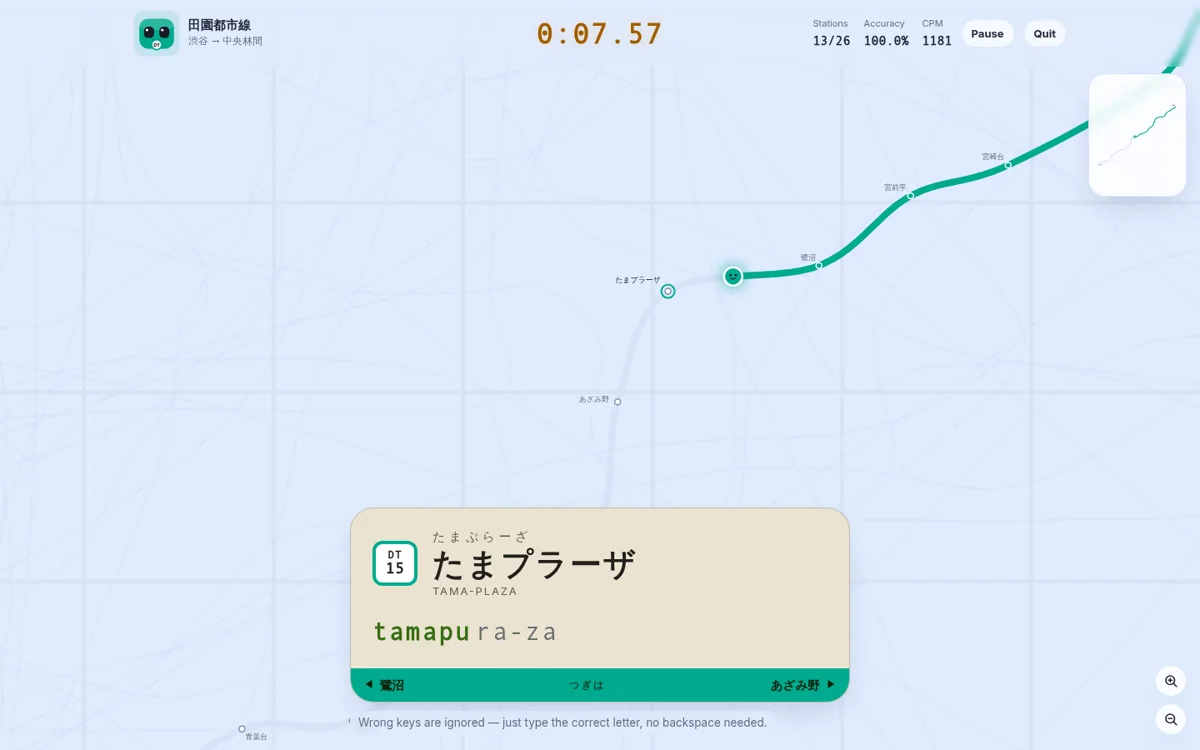
The nationwide update gives Rail Typing for iPhone 472 more route cards. Instead of tackling the whole list, pick one different railway each day. These five are in the app’s published catalog; they are ideas for in-game practice, not a real-world itinerary.

Original AI-generated concept illustration; not an app screenshot or an actual railway map.
Which Japanese railway should you practice first?
Choose the Tateyama Cable Car for the shortest card in this selection, Keihan Uji for a compact eight-station ride, or Enoden for a fifteen-station session. These are choices within the iPhone app’s nationwide catalog, not recommendations about current travel conditions. Each gives you a different amount of reading material.
| App card | Station entries | Card endpoints | Practice focus |
|---|---|---|---|
| Enoden | 15 | 藤沢 → 鎌倉 | A familiar route with varied names |
| Keihan Uji | 8 | 中書島 → 宇治 | A compact ride and an unfamiliar reading |
| Toyama Chitetsu Tateyama | 14 | 寺田 → 立山 | Reading names beyond a big-city network |
| Tateyama Cable Car | 2 | 立山 → 美女平 | Repeating two names carefully |
| Yui Rail | 19 | 那覇空港 → てだこ浦西 | Mixing kanji and kana place names |
Counts and endpoints are from the app’s v11 catalog, checked on 15 November 2026. They describe these cards, not every possible through service or how many stops a real train makes.
Enoden: a comfortable first full ride
The app’s Enoden card runs from 藤沢 to 鎌倉 with fifteen station entries. Set yourself one task on the first pass: read the whole name before typing. If you know the area, a familiar place can help you notice a reading instead of rushing past it.
On a second pass, pick one station where you hesitated. Was the problem a kana spelling, a long name, or simply not recognizing the written place? Keep that question small. You can compare the app’s names with Enoden’s official station list, which is also the place to start for actual railway information.
Keihan Uji: eight stops, one useful reading challenge
This card connects 中書島 and 宇治. Eight names make it practical to revisit a route without committing to a long list. Start by learning 中書島 as a whole: ちゅうしょじま. Reading the characters independently is less useful here than connecting the complete written name with its sound.
A good second task is to keep the route but change the mode. First read with the answer visible; then listen. Keihan’s station information for Chushojima provides the operator’s written reading and station details.
Toyama and Tateyama: distinguish two different cards
The Toyama Chitetsu Tateyama Line card has fourteen entries from 寺田 to 立山. 五百石 is one of the readings worth pausing over. Choose this card when you want several names to work through, rather than two repeated targets.
The Tateyama Cable Car card is separate: two entries, 立山 and 美女平. A short card gives you less material, not automatically easier material. Try reading both names accurately, then hearing them without looking. Do not combine the two cards into an assumed through train or infer a real-world timetable from their shared endpoint.
Yui Rail: a different shape of station name
The Yui Rail card has nineteen entries from 那覇空港 to てだこ浦西. Its terminal pair alone changes the visual pattern: one name is written in kanji, while the other includes kana. Instead of treating every station as an equivalent typing length, look at the whole spelling before you start.
For this ride, make accuracy the goal. After finishing, pick one name you would like to recognize on a sign. Saying it once without the screen is a useful check that the practice was more than a sequence of correct keystrokes.
A five-session exploration plan
Use the table to choose your order rather than trying to finish everything at once. One session can be two careful names on the cable car, another the eight-stop Uji card, and another a complete Enoden ride. Leave a separate session to repeat your favorite route by ear. The last session can be a return to whichever name still causes hesitation.
If a route feels too long for the time you have, choose a shorter card next time. The point of a nationwide collection is having a choice of material, not requiring you to spend longer in the app.
Frequently asked questions
Which of these cards has the fewest stations?
The Tateyama Cable Car card has two entries in this selection. Keihan Uji has eight, Enoden fifteen, the Tateyama railway fourteen and Yui Rail nineteen. These are card counts from the dated app release.
Do I need to know Japanese kanji before starting?
You can begin by looking at the kana reading, or use the app’s selection mode. If you already know kana, connect each written name with its full reading before trying listening. Use the same route again rather than increasing difficulty and changing every station at once.
Is this a railway trip I can follow in one day?
No. These are independent in-game practice ideas from different areas. For travel, choose a destination and check its operator’s current route and service information separately.
Will these names appear in the browser version?
The guide describes the iPhone catalog. The website maintains a separate route list, so a card’s presence in the app does not establish that it is playable in the browser.
Further reading
Read the nationwide launch details, then use the station-reading routine for the names that slow you down.
These cards are available in the iPhone app; the browser catalog is separate. Open the app’s route list, let it refresh, and choose a card. Get Rail Typing on the App Store, then try our five-minute reading routine.