Overview
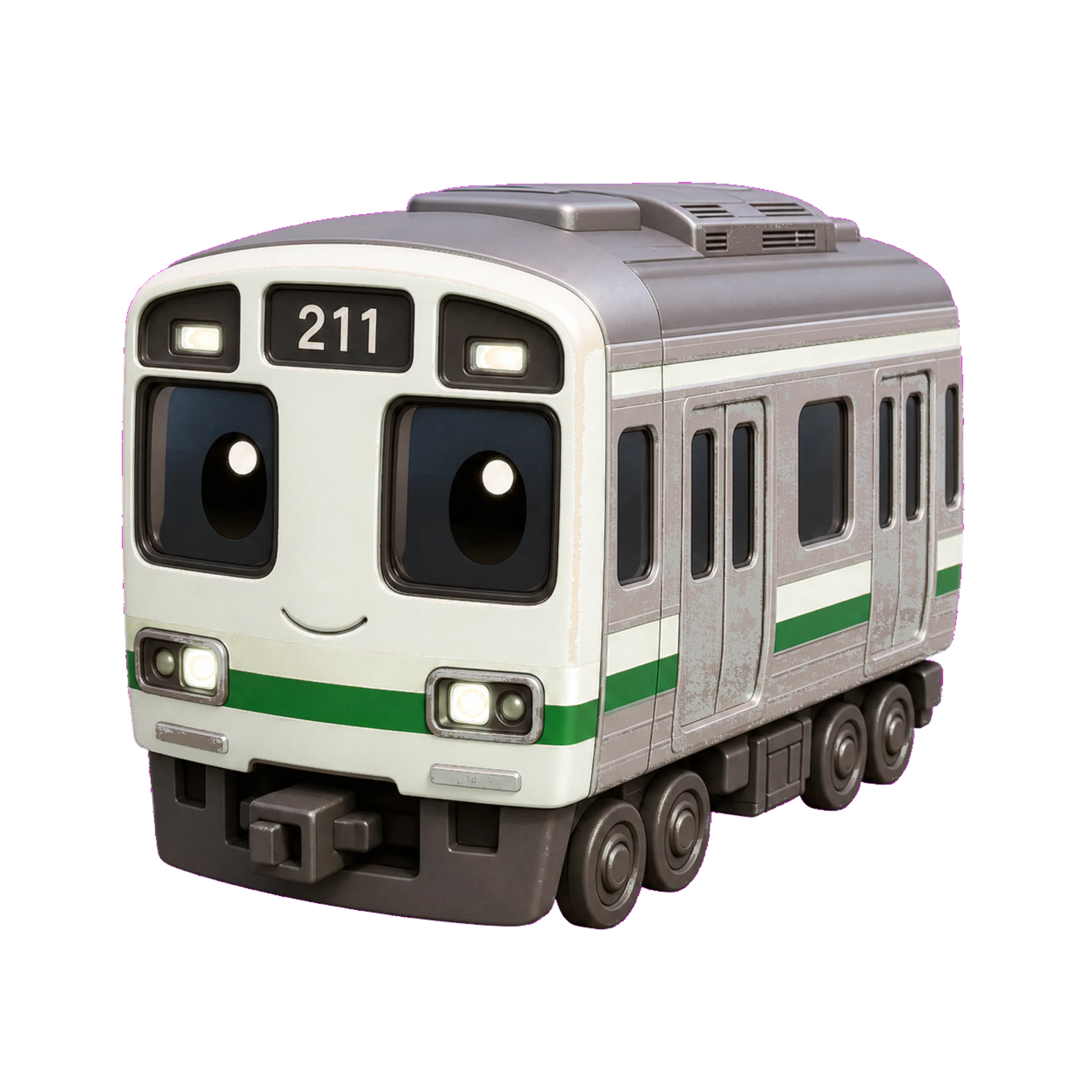
The Utsunomiya Line (JU) is the commuter-facing name for the Tohoku Main Line between Tokyo and Kuroiso, 34 stations in all. What the game covers is the core of that operating pattern: the 24 stations from Tokyo Station north to Utsunomiya. Since the March 2022 timetable revision the stretch beyond Utsunomiya has been worked by one-person E131 series shuttles, split off from the through services to the south. The orange-and-green Shonan-liveried 211 series is its classic image; E231 and E233 sets handle the work today. It shares the Tokyo–Omiya stretch, and the JU numbering, with the Takasaki Line.
Along the route
North from Tokyo and Ueno, the commuter strongholds of Akabane, Urawa and Omiya follow in turn. Past Omiya the dense townscape gives way to fields and low-rise housing through Kuki, Koga and Oyama, then crosses the Tone River into Tochigi. The terminus, Utsunomiya, is famous for gyoza and serves as the gateway to Nikko.
Why play it
24 stations that mix short names like Tokyo with distinctly northern-Kanto readings such as Higashi-washinomiya and Suzumenomiya — a good way to get out of the central Tokyo naming comfort zone.
Line data
Everything below is derived from the station data the game runs on, so it always matches what you actually type on the 宇都宮線 — all 24 stops of it.
- Operator
- JR East
- Line symbol
- JU
- Stations
- 24
- Shape
- Terminal to terminal
- Termini
- 東京 — 宇都宮
How much typing is this?
Typing every station name on this line takes 190 keystrokes, an average of 7.9 per station. The longest name is さいたま新都心 (saitama-shintoshin) at 18 keystrokes; the shortest is 尾久 (oku) at 3. Those counts come from running each name's kana through the game's own romaji engine, so they are what your fingers actually do — not the length of the printed spelling.
Along the way: 0 names contain a small っ, which doubles the next consonant; 1 contain a small ゃ, ゅ or ょ, where the engine accepts both the Hepburn and Kunrei spellings (sha or sya, shu or syu); and 1 end in ん, whose trailing n folds into whatever comes next rather than standing alone.
Where you can change trains
6 of the 24 stations on this line connect to another line in the game. Follow any symbol to that line's guide.
- 東京JY 山手線M 丸ノ内線JC 中央線JK 京浜東北線JO 総武快速・横須賀線JT 東海道線JE 京葉線
- 上野JY 山手線G 銀座線H 日比谷線JK 京浜東北線JJ 常磐線快速
- 赤羽JK 京浜東北線JS 湘南新宿ラインJA 埼京線
- 浦和JK 京浜東北線JS 湘南新宿ライン
- さいたま新都心JK 京浜東北線
- 大宮JK 京浜東北線JS 湘南新宿ラインJA 埼京線JU 高崎線TD 東武アーバンパークライン
Marked with a star: 東京・上野 — the major interchanges, which the maps always label and the game marks with a heavier arrival stamp.
Every station on the line
All 24 stations in order, with the official station number, the name in kanji, the kana the typing is derived from, and its Hepburn romaji.
| # | No. | Station | Kana | Romaji |
|---|---|---|---|---|
| 1 | JU01 | 東京 | とうきょう | tokyo |
| 2 | JU02 | 上野 | うえの | ueno |
| 3 | JU03 | 尾久 | おく | oku |
| 4 | JU04 | 赤羽 | あかばね | akabane |
| 5 | JU05 | 浦和 | うらわ | urawa |
| 6 | JU06 | さいたま新都心 | さいたましんとしん | saitama-shintoshin |
| 7 | JU07 | 大宮 | おおみや | omiya |
| 8 | JU08 | 土呂 | とろ | toro |
| 9 | JU09 | 東大宮 | ひがしおおみや | higashi-omiya |
| 10 | JU10 | 蓮田 | はすだ | hasuda |
| 11 | JU11 | 白岡 | しらおか | shiraoka |
| 12 | JU12 | 新白岡 | しんしらおか | shin-shiraoka |
| 13 | JU13 | 久喜 | くき | kuki |
| 14 | JU14 | 東鷲宮 | ひがしわしのみや | higashi-washinomiya |
| 15 | JU15 | 栗橋 | くりはし | kurihashi |
| 16 | JU16 | 古河 | こが | koga |
| 17 | JU17 | 野木 | のぎ | nogi |
| 18 | JU18 | 間々田 | ままだ | mamada |
| 19 | JU19 | 小山 | おやま | oyama |
| 20 | JU20 | 小金井 | こがねい | koganei |
| 21 | JU21 | 自治医大 | じちいだい | jichi-idai |
| 22 | JU22 | 石橋 | いしばし | ishibashi |
| 23 | JU23 | 雀宮 | すずめのみや | suzumenomiya |
| 24 | JU24 | 宇都宮 | うつのみや | utsunomiya |