If you have ever traced a Tokyo subway map and wondered why some lines carry the letters A, I, S, and E while everything else uses different symbols, the answer is the Toei Subway. So what is the Toei Subway? It is the four-line underground network run by the city itself — a public operator sitting right alongside the larger, privately run Tokyo Metro. Learning what Toei is, which lines it runs, and how it connects to the airports makes navigating the capital far less confusing.
What is the Toei Subway?
Toei Subway (都営地下鉄) is operated by the Tokyo Metropolitan Bureau of Transportation, the transport arm of the Tokyo metropolitan government. In other words, it is a public subway run by the city, which is exactly what "Toei" (都営, "metropolitan-run") means. That makes it a separate company from Tokyo Metro, the private operator that runs nine lines. The two share stations and maps but sell tickets independently, so the Toei network is worth knowing in its own right rather than lumping all Tokyo subways together.
The four Toei Subway lines
Toei runs exactly four lines, each with its own letter and signature color:
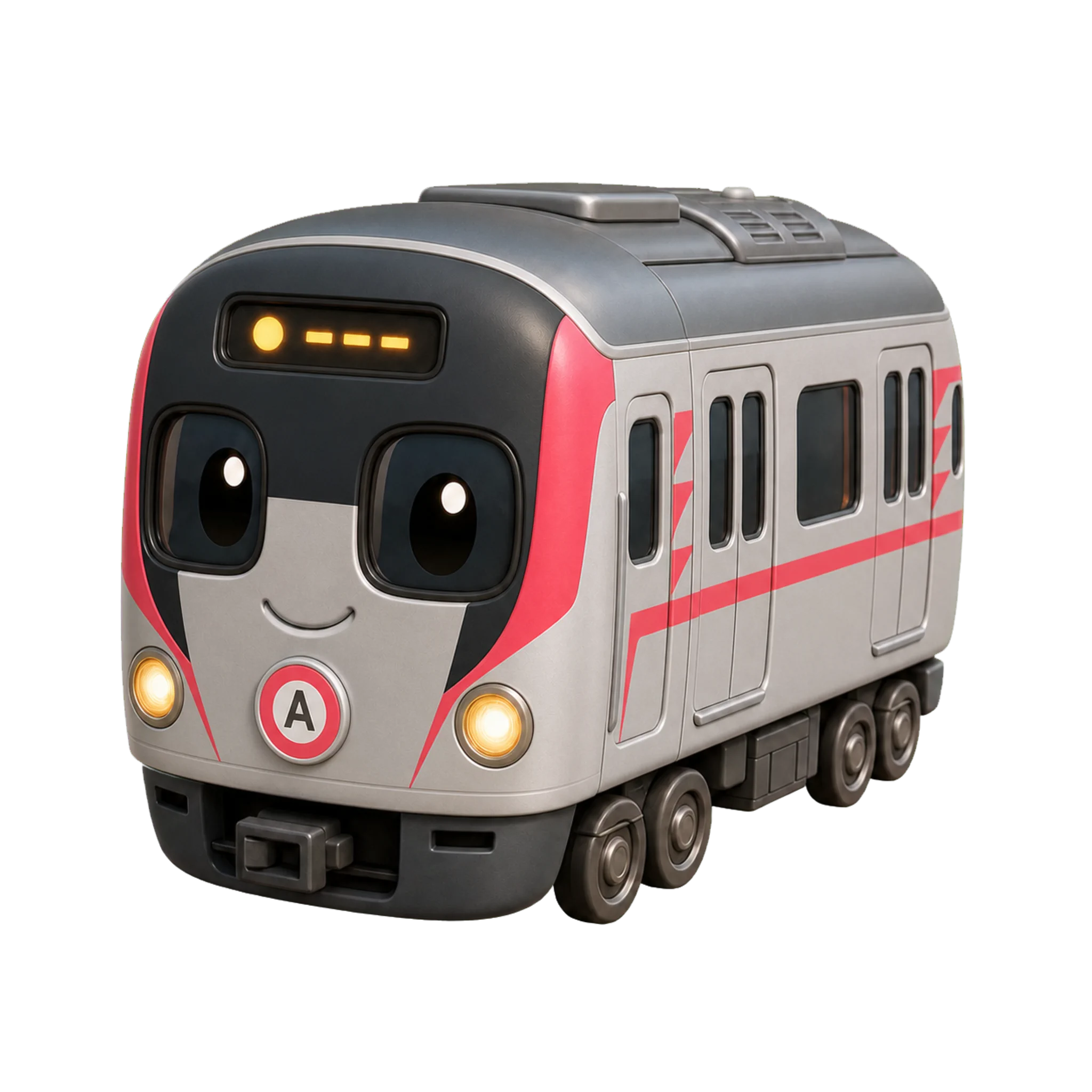
- Asakusa Line (A, rose red) — the first Toei line, opened in 1960 and the oldest of the four.
- Mita Line (I, blue) — a north–south route linking Meguro up through central districts.
- Shinjuku Line (S, leaf green) — running west from central Tokyo toward the suburbs.
- Oedo Line (E, magenta) — a deep figure-six loop that is Tokyo's deepest subway and one of its newest.
Once you know these four letters — A, I, S, E — you can spot a Toei line on any station sign instantly, because every other underground line belongs to Tokyo Metro.
Airport access on the Asakusa Line
The Asakusa Line is the one many travelers use without realizing it is Toei. Through through-running — where trains continue directly onto other companies' tracks — Asakusa Line services connect to the Keisei railway toward Narita Airport (成田) and the Keikyu railway toward Haneda Airport (羽田). That means you can ride from one airport, through central Tokyo, and toward the other on services that share the Asakusa Line, without the network ever feeling like it changes. For anyone flying into Tokyo, this single Toei line quietly does a lot of the heavy lifting.
The Oedo Line: deep and looping
The Oedo Line deserves a special mention. Opened in 2000, it is one of Tokyo's newest subways and, because it had to weave beneath every existing line, it is also the deepest — some platforms sit dozens of meters underground. Its route traces a distinctive figure-six shape, looping around central Tokyo before tailing off toward the west, so it reaches neighborhoods the other lines miss. Riding it feels different from the older Asakusa Line, and typing it end to end is a good way to feel that loop for yourself.
Toei is a separate operator from Tokyo Metro
The key practical point: Toei and Tokyo Metro are different operators with separate fares. A trip that stays on Toei is charged as one journey; the moment you switch to a Tokyo Metro line, a second base fare enters the picture (an inter-operator transfer discount softens it a little). If you plan to cross between them all day, a combined pass that covers both removes the question entirely. For the full breakdown, see Toei Subway vs Tokyo Metro, and for how the subways compare to the JR network, read Tokyo Metro vs JR.
Type the Toei lines yourself
The fastest way to memorize the four Toei lines is to run trains along them. In Tokyo Rail Typing you pick a line, a start station, and a direction, then type each station name to move the train — every run reports your time, CPM, WPM, accuracy, and per-station splits, and those A/I/S/E letters stick in memory naturally.
Start with the airport-linked Asakusa Line, dive into the deep Oedo Line, then compare the Mita Line and the Shinjuku Line. Pick one and type it terminal to terminal — you will know the Toei Subway better than most visitors by the time you finish.