Ride underground in the capital and you are really using two different companies, which is why Toei Subway vs Tokyo Metro is one of the first things worth understanding before you tap your IC card. They share stations, maps, and even platforms, yet they sell tickets separately — so the difference between Toei and Tokyo Metro quietly shapes how much a trip costs and how you plan a transfer. Tokyo has, in effect, two subway operators layered on top of each other, and telling them apart is easier than it looks.
Two subway operators, one city
Tokyo Metro (東京メトロ) is a private joint-stock company and the larger of the two, running nine lines: Ginza, Marunouchi, Hibiya, Tozai, Chiyoda, Yurakucho, Hanzomon, Namboku, and Fukutoshin. Toei Subway (都営地下鉄) is public — operated by the Tokyo Metropolitan Bureau of Transportation — with four lines: Asakusa, Mita, Shinjuku, and Oedo. Between them they cover almost every corner of central Tokyo, and their trains often through-run onto suburban private railways, which is why a single ride can feel like it never leaves "the subway" even as the operator changes underfoot.
How to tell Toei and Tokyo Metro apart
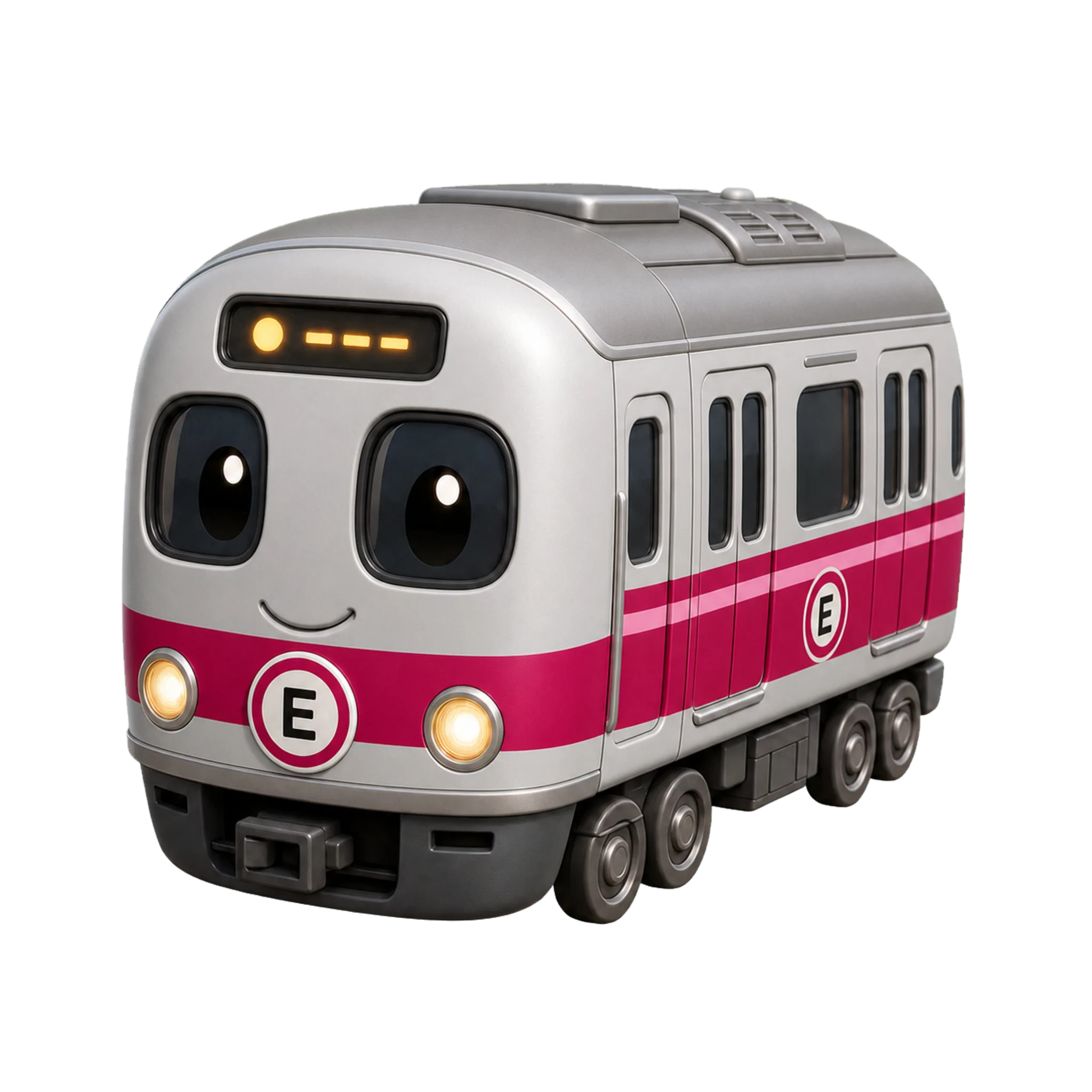
The fastest tell is the line letter printed on every station sign and every station code. Tokyo Metro lines use G, M, H, T, C, Y, Z, N, F — Ginza is G, Marunouchi M, Tozai T, and so on. Toei lines use just A, I, S, E — Asakusa (A), Mita (I), Shinjuku (S), and Oedo (E). If the code beside a station name starts with one of those four letters, you are on Toei; anything else underground is Tokyo Metro.
The logos confirm it: Tokyo Metro uses a heart-shaped blue "M", while Toei carries a green ginkgo-leaf mark, the symbol of the Tokyo metropolitan government. Each line also has its own signature color, so once you know the letter, the color on the map does the rest.
Why the two subway companies matter for fares
Here is the practical catch: because they are separate operators, transferring between Toei and Tokyo Metro means paying into two fare systems. A trip that stays entirely on Tokyo Metro is charged as one journey; the moment you switch to a Toei line, a second base fare enters the picture. There is an official inter-operator transfer discount that shaves a bit off the combined cost, but it is still meaningfully more than an equivalent ride kept within a single operator.
For sightseeing this rarely needs micromanaging. If you plan to hop across lines all day, a combined pass — the kind that covers both Toei and Tokyo Metro on one ticket — removes the whole question, since unlimited rides ignore operator boundaries entirely. When you are choosing routes on your own, though, staying within one operator where you reasonably can is the simple money-saving habit.
Which lines each operator runs
Tokyo Metro's network is where most famous names live — the historic Ginza Line, the winding Marunouchi Line, and the fast east–west Tozai Line that many commuters rely on. Toei's four lines fill the gaps: the airport-linking Asakusa Line, the north–south Mita Line, the westbound Shinjuku Line, and the deep, looping Oedo Line that reaches neighborhoods the others miss.
You can feel the difference in character by typing them. Try a Toei run on /play/asakusa or the deep loop of /play/oedo, then compare a Tokyo Metro line on /play/ginza or /play/tozai.
Learn the map by typing it
The clearest way to internalize who runs what is to run trains yourself. In Tokyo Rail Typing you pick a line, a start station, and a direction, then type each station name to move the train — every run reports your time, CPM, WPM, accuracy, and per-station splits, and the letter codes stick in your memory naturally.
For more background, read what the Toei Subway is, the broader Tokyo Metro vs JR comparison, and the Tokyo subway pass guide before you go. Then pick an operator and type a line end to end — start with Ginza or Asakusa and see which network you remember first.