Tokyo Rail Typing supports three input modes—Romaji, Kana and Kanji—so the same railway route can train different Japanese skills. The best mode is not simply the hardest one; it is the one that gives you a clear next step.
Romaji: the accessible starting point
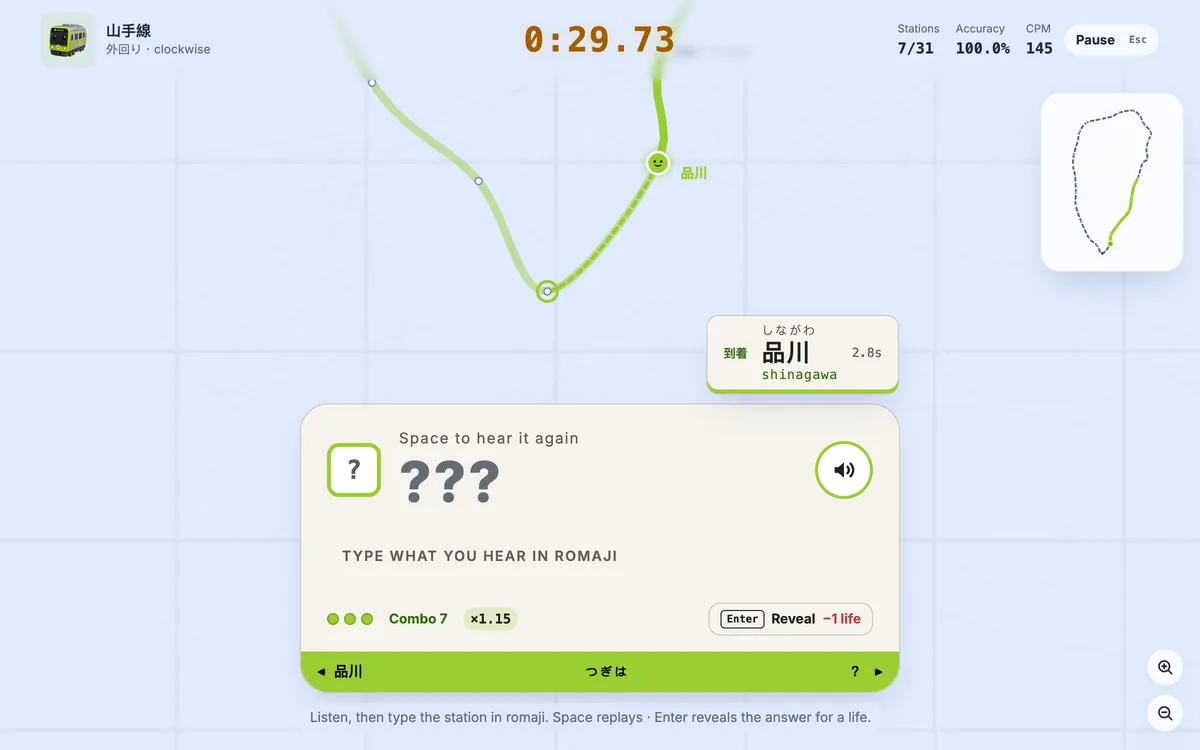
Choose Romaji if you are new to Japanese or want a fast keyboard game without configuring an IME. You type familiar Latin letters such as shibuya and shinjuku.
The matcher accepts common alternatives, including shi/si and tsu/tu, so you can use the romanization habits you already know. Wrong keys do not advance the train; type the correct next letter and keep moving.
Best for: beginners, travel learners, touch-typing practice and fast leaderboard runs.
Kana: connect keystrokes with Japanese sounds
Kana mode still uses a physical keyboard's romaji keys, but the station board fills with kana unit by unit. This removes IME conversion from the exercise while making the sound structure visible.
It is a useful bridge: your fingers keep the familiar romaji motion, while your eyes learn to recognize sequences such as し・ぶ・や instead of only shibuya.
Best for: learners studying hiragana, mora rhythm and kana recognition.
Kanji: practice a real Japanese IME
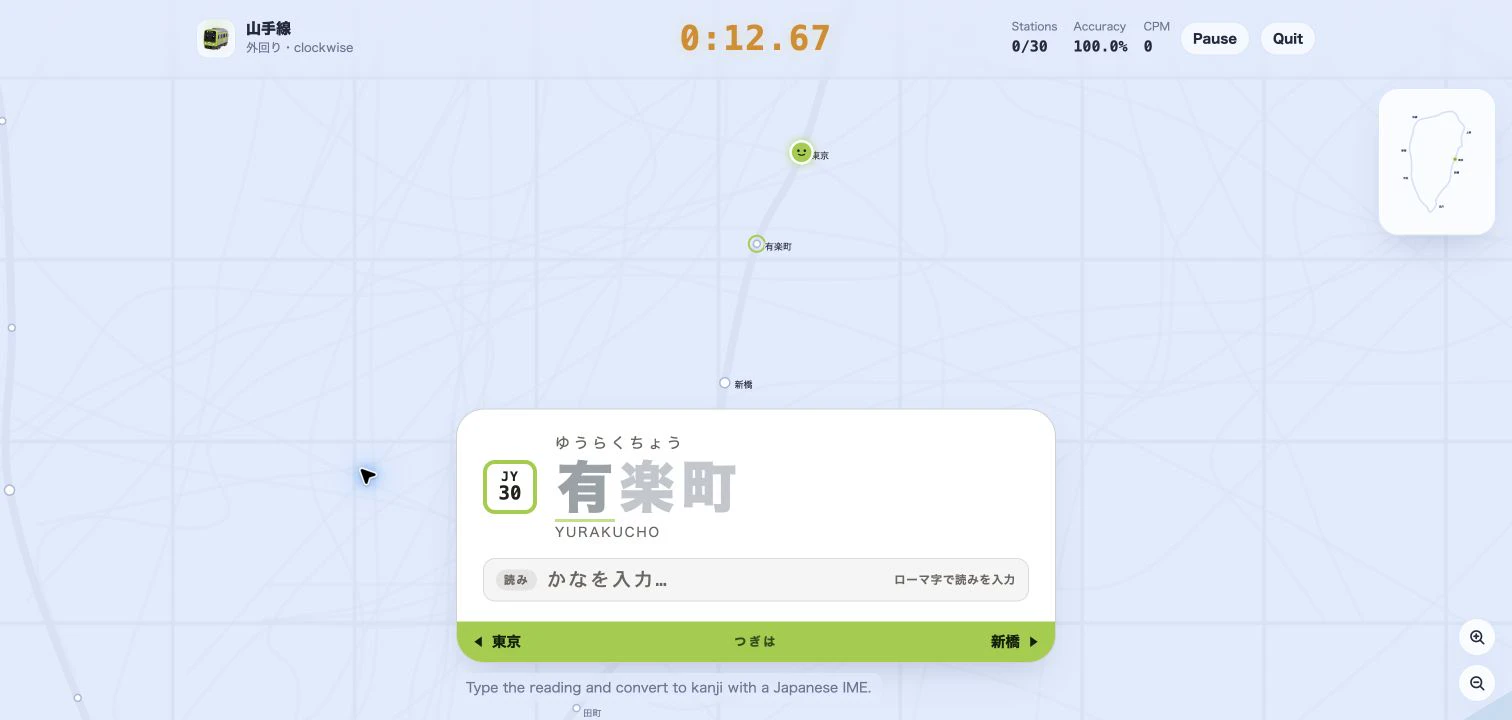
Kanji mode uses your device's Japanese IME. Compose the reading, choose the correct conversion and commit the station name in kanji. This resembles everyday Japanese computer input and introduces the extra skill of conversion control.
Because the browser receives committed composition segments, this mode rewards clean IME habits rather than raw Latin-key speed alone.
Best for: intermediate learners, Japanese IME users and authentic station-name practice.
How to build a progression plan
Use one familiar route so station order stays constant:
- Complete it in Romaji with at least 95% accuracy.
- Repeat in Kana until the displayed sounds feel immediate.
- Enable a Japanese IME and rebuild the record in Kanji.
- Compare CPM, accuracy and station splits after each run.
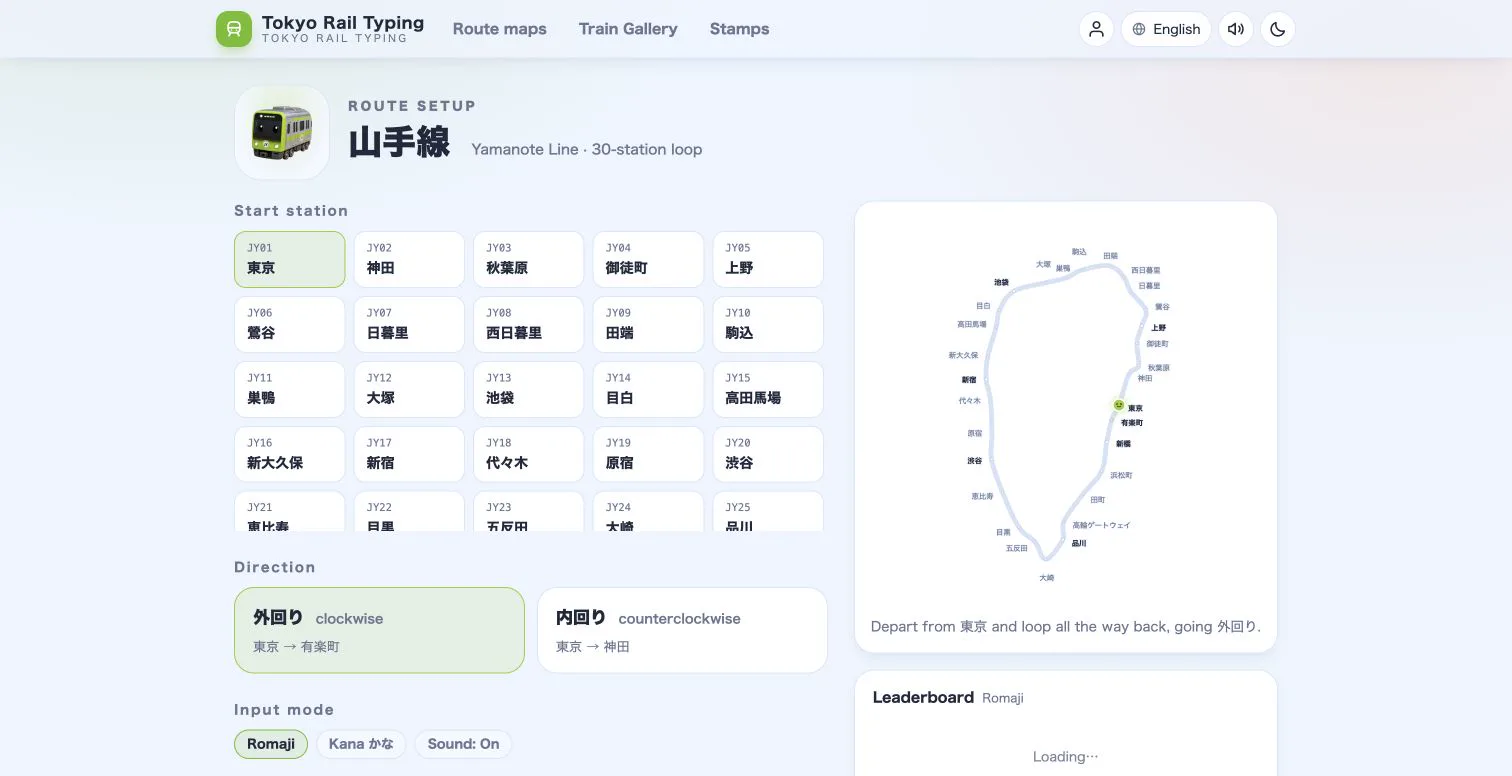
Records are kept separately by line and mode, so this progression is safe: a slower Kanji experiment cannot overwrite your Romaji best. Start on the Yamanote Line, read the deeper Romaji vs Kana vs Kanji comparison, or use real Tokyo stations for Japanese typing practice.