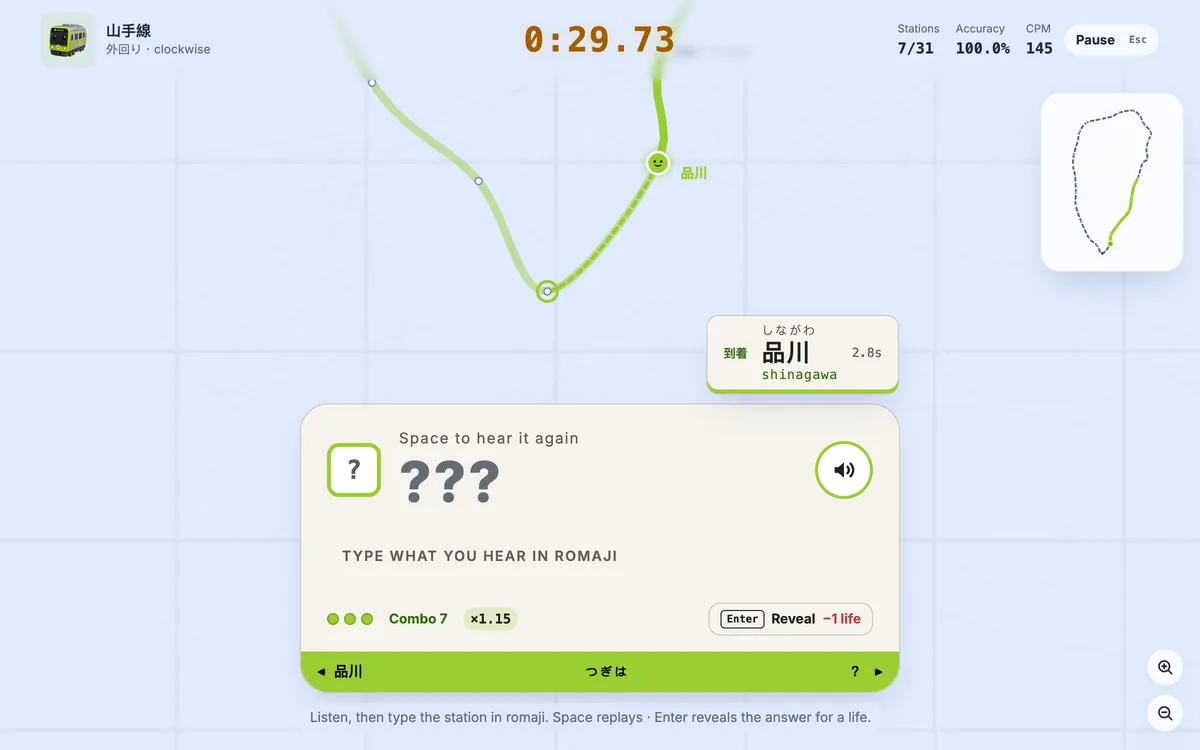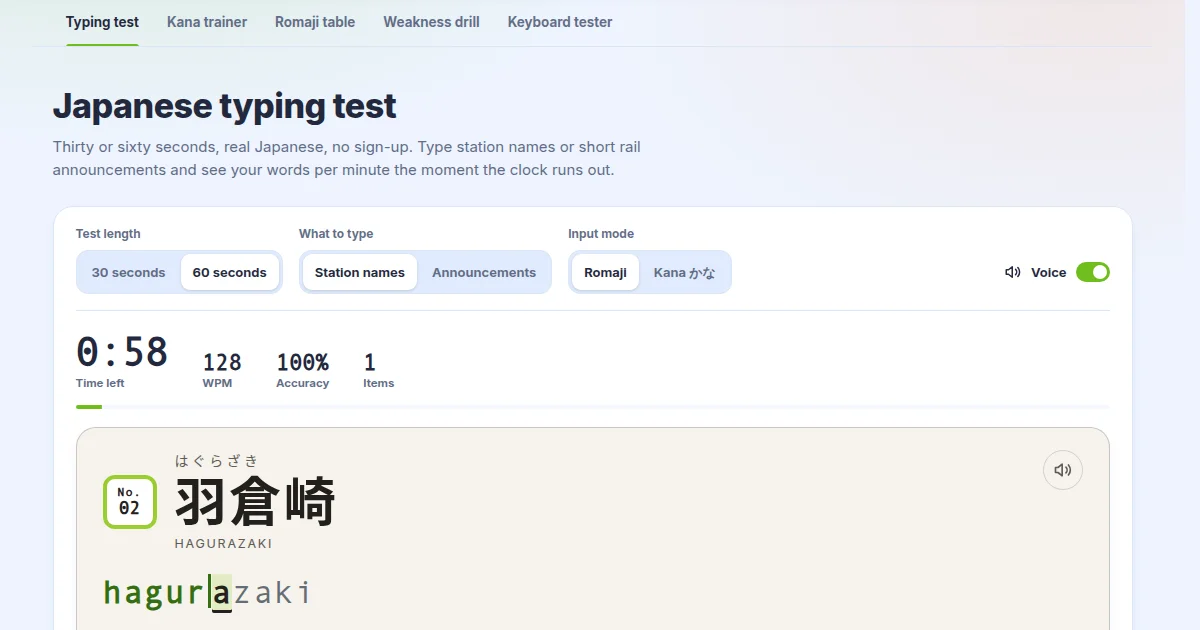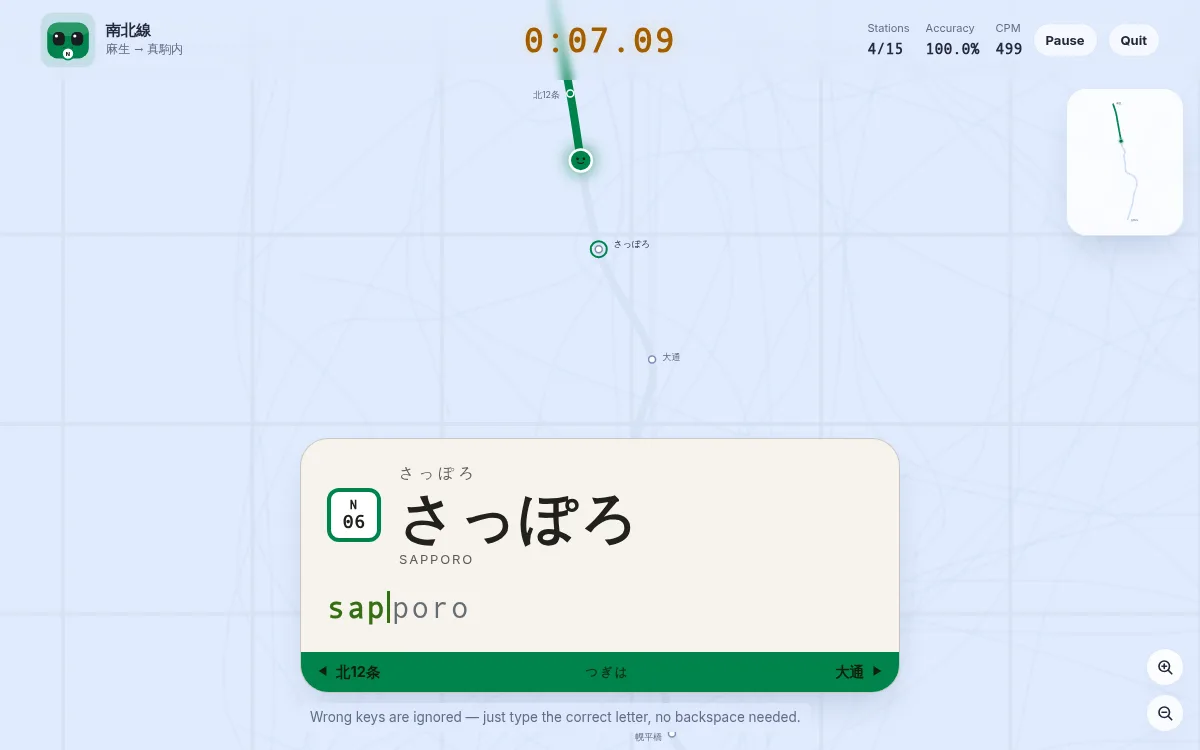
Japanese station names look intimidating in kanji, but underneath every one of them is a string of kana that maps to a predictable set of Latin letters. This is that map: a practical Hepburn romaji cheat sheet for reading and typing the names you meet in Tokyo Rail Typing. Learn the handful of tricky rows and you can romanize almost any station on sight. This page teaches the chart; if you just want the exhaustive list, the romaji input reference is generated from the game's typing engine and shows every spelling it accepts.
What Hepburn romaji is
Hepburn is the romanization system you already see on station signboards, maps, and JR platforms — the one that writes し as "shi" and つ as "tsu" because it follows how the sounds are actually pronounced. It is the default the game shows and the spelling most learners find natural. If you want a mental model for why Japanese offers several scripts at all, the romaji vs kana vs kanji guide fills that in; here we stay focused on the romaji chart itself.
The basic rule is simple: most kana are one consonant plus one vowel, typed exactly as they sound.
| Kana | Hepburn | Also accepted |
|---|---|---|
| し | shi | si |
| つ | tsu | tu |
| ち | chi | ti |
| ふ | fu | hu |
| じ | ji | zi |
| しゃ | sha | sya |
| じゃ | ja | zya |
The tricky sounds
A small number of kana break the tidy consonant-plus-vowel pattern, and they are exactly the ones that trip people up on station boards:
- し / つ / ち / ふ — these are the classic four. Hepburn writes them shi, tsu, chi, fu, following the real pronunciation rather than the "si, tu, ti, hu" you might expect from the row.
- Palatalized sounds (しゃ・しゅ・しょ) — a small ゃ・ゅ・ょ combines with the syllable before it: しゃ = sha, しゅ = shu, しょ = sho. Likewise ちゃ = cha, じゃ = ja.
- Long vowels — the display may show a macron, like ō or ū, to mark a held vowel. You never type the macron; type the plain vowels instead.
Small っ and ん
Two kana behave differently from everything else, and both show up constantly in station names:
- The small っ (sokuon) doubles the consonant that follows it. けっぷ becomes keppu; the っ has no sound of its own, it just gears up the next consonant.
- ん is typed "n" (and "nn" is also accepted). It is the only kana that stands alone as a single consonant.
Alternate spellings the game accepts
Tokyo Rail Typing does not force one "correct" spelling. The typing engine tokenizes each kana and accepts every common romaji spelling, with the Hepburn form as the canonical first choice. So し takes shi or si, つ takes tsu or tu, ち takes chi or ti, ふ takes fu or hu, じ takes ji or zi, and しゃ takes sha or sya. Type whichever your fingers already know.
Matching is also prefix-based and forgiving. Each keystroke either advances the current kana or is simply rejected — a wrong key does nothing and the train just stays put, so you never need backspace to fix a slip. Keep typing and the right letter takes over.
Worked examples on real stations
Here are six real Tokyo stations, from easy to sneaky:
- 新宿 → Shinjuku — し = shi, then n-ju-ku. A perfect example of the shi rule.
- 渋谷 → Shibuya — shi again, then bu-ya. Say it, then spell it.
- 秋葉原 → Akihabara — all plain syllables: a-ki-ha-ba-ra. No traps, just length.
- 御茶ノ水 → Ochanomizu — ちゃ = cha in the middle: o-cha-no-mi-zu.
- 大手町 → Ōtemachi — the ō is a long vowel; you type plain otemachi. Note ち = chi inside "machi".
- 六本木 → Roppongi — the small っ doubles the p, giving the double-p roppongi.
Ready to put the chart to work? Start a lap on the Yamanote Line, pick up the names themselves in the station-names guide, or browse more guides on the blog.